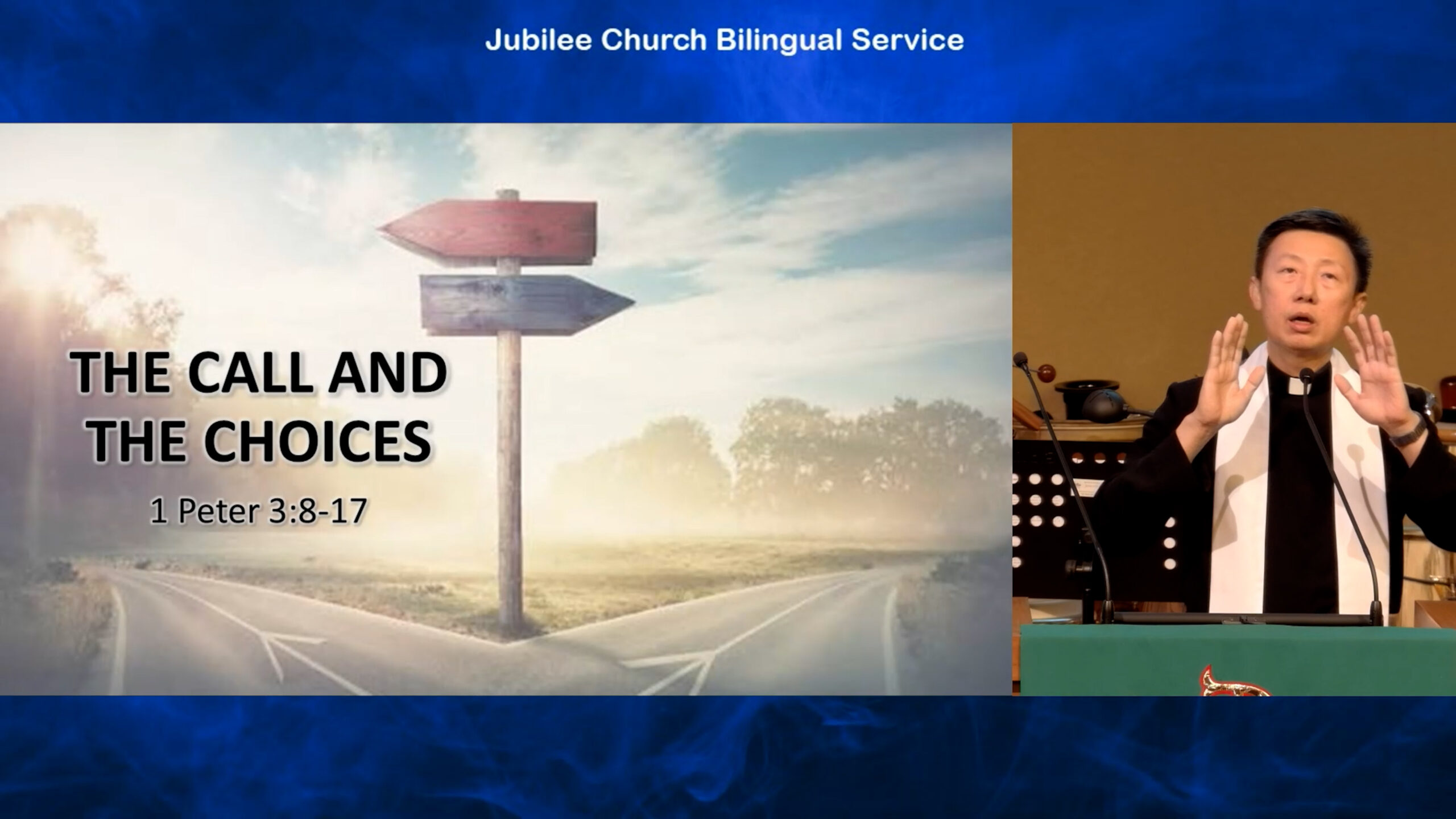
Introduction
Have we ever been hurt by someone, and wanted to hurt them back?
Perhaps someone spoke harshly about us. Perhaps someone took credit for our work. Perhaps a family member said something that deeply wounded us. In moments like these, our natural instinct is to strike back—to return words that are just as sharp, just as cutting.
That is a very human response. It is also what the world around us expects. If someone hurts you, hurt them back. This is how honour often works, both in the ancient world and in our own.
But Peter calls Christians to something different—something more difficult, something that can only be lived out through faith in Jesus Christ.
Peter is writing to believers who are suffering. They are being mocked, slandered, misunderstood, and even losing their social standing because they follow Christ. Yet before Peter addresses how Christians should respond to those who oppose them in verses 9–17, he first calls believers in verse 8 to unity, sympathy, brotherly love, compassion, and humility. Could it be that some of their struggles also came from within the church?
In the midst of all this, Peter tells them: “Do not repay evil for evil or reviling for reviling, but on the contrary, bless” (v. 9).
That is not an easy command. It runs against our instincts and against the values of the world. So this morning, let’s consider two questions together.
First, how are we to treat one another as the family of God?
Second, how are we to respond to those who hurt us?
I.
Let’s turn to verse 8 as we consider our first question. Peter sets before us five virtues.
Here’s something interesting. Four of these qualities were actually admired in the wider Greco-Roman world of Peter’s day. Unity, sympathy, brotherly love, and a tender heart were all regarded as virtues, even outside the church.
But one of them was not admired at all. Humility.
In the ancient world, humility was not considered a virtue but a sign of weakness. It suggested low social status. A humble person was someone who lacked the power to defend his own honour or protect his own reputation.
So when Peter includes humility in this list, he is doing something radical. He is showing that Christians do not simply adopt the best values of their culture. They are living lives shaped by Christ himself. Their values are different because their Lord is different.
That is really the key to understanding this whole list. Peter takes familiar virtues and fills them with the new meaning we find in Christ.
Take unity of mind, for example. In the wider culture, unity often meant working together toward a common purpose. Peter does includes that idea, but Christian unity goes further. It is a unity shaped by Christ—a shared mind formed by the gospel and the apostles’ teaching. It means laying aside our old way of thinking and learning to see the world through the mind of Christ.
So this list is a call to a different kind of community—a community shaped, from the inside out, by Jesus.
Notice something else. Several of these qualities were commonly associated with family relationships in the first century. “Brotherly love” and “a tender heart,” or compassion. These are qualities people were expected to show to their own flesh and blood.
Peter takes these family virtues and applies them to the church. Why? Because, as he has already told us earlier in this letter, we have been born again. God is now our Father. That means we have become a family—brothers and sisters bound together by the new birth.
So here is the first call in this passage: treat one another like family. Not like acquaintances. Not like strangers who happen to sit in the same room on Sunday, who believe the same truth. But as family members.
II.
What does it look like to treat one another like family?
Let’s begin with unity of mind and humility. These two virtues belong together.
Our unity is not built on everyone agreeing on every small thing. Rather it is built on our shared faith and the way of life we have received in Christ. That shared foundation holds together people from very different backgrounds. We are united because we all belong to Christ.
This kind of unity pushes back against two very modern temptations: individualism and consumerism. We live in a world that tells us to look out for ourselves first, to ask, “What’s in it for me?” But unity of mind calls us to take the lower place, to choose the less honoured role, and to put the interests of others ahead of our own. That is hard. It goes against the grain of how we have been taught to think. Yet that is what family does for one another.
And this is where humility comes in. As we saw earlier, in the first century humility was seen as weakness.
Think about that. Humility means giving up the constant need to defend ourselves. It means entrusting our reputation to God. That is exactly what our competitive society tells us not to do. Yet Peter points us to Jesus. Like him, we do not need the world’s tactics to defend ourselves. As God’s children, our priority is not to win every fight, but to point people to Christ.
Peter then turns to sympathy and compassion. Sympathy is more than simply recognizing another person’s pain. It is having the courage to enter into it—to feel with them rather than merely observe them from a distance.
Compassion, in our modern world, can sometimes sound like pity for someone less fortunate than ourselves. But in the first century, it refers to the kindness family members showed to one another. Not pity from above, but care shared between people who belong to the same household.
That means when one member of our church family suffers, their suffering becomes our suffering too. Peter is calling us not to stand at a distance and feel sorry for one another, but to step into each other’s burdens, just as we would for our own brother or sister.
Finally, Peter speaks of brotherly love. We often hear this phrase and think of warm feelings or affection. But Peter is after something more solid. Perhaps our focus should be more on brother than love. Brotherly love is the commitment to seek the good of those whom God has made our family. It certainly includes affection, but it goes beyond that. It is helping one another follow Christ faithfully.
That is why Paul says in Colossians that his goal is to “present everyone mature in Christ” (Col. 1:28). That should become our goal for one another as well.
So here is the first choice Peter calls us to make: cultivate loving relationships in the church. Treat one another like family. Commit yourself to helping one another become more like Christ.
That is how we are to live within the family of God. But Peter does not stop there. He addresses our second question: How are we to respond to those who hurt us?
III.
Peter says in verse 9, “Do not repay evil for evil or reviling for reviling, but on the contrary, bless.”
Peter is no longer talking about life within the church. He is speaking about opposition because of Christ. Yet the principles he gives also help us respond whenever we are unfairly criticised, misunderstood, or unfairly judged by others.
To understand Peter’s command, we need to remember that in the honour-and-shame culture of his day, insults and slander were weapons used to publicly shame people and destroy their reputation. So when Peter says, “Do not repay evil for evil or reviling for reviling,” he is asking something truly startling. In a culture where honour had to be defended at all costs, Christians were called not to fight back.
Why would Peter ask Christians to respond like this? Peter answers by quoting Psalm 34. This psalm had long served as a prayer of comfort for the righteous who suffered. Peter reaches back to it because it reminds believers that God sees, God hears, and God stands against those who do evil while listening to the prayers of the righteous.
Peter’s readers faced mockery in their villages and marketplaces. Our version may look different—a comment online, a joke at work, a friend who goes quiet when they learn what we believe. But the sting, and the temptation to strike back, feel just as real.
So what is this call, exactly? It is a call to return blessing for insult and good for evil. More than that, it is a call to a new kind of character—a people who refuse to let their enemies define who they are. Instead, they let Christ define them.
This call rests on something bigger than willpower: the power of the new birth. Because God has begun his transforming work in us, we can genuinely desire the good of those who hurt us—not gritting our teeth or pretending to be kind, but blessing them sincerely from the heart. Being mistreated because you are a Christian never gives you permission to respond in kind. In fact, it is precisely when we least feel like extending grace that grace matters most.
This is not an easy thing to do. But returning evil for evil only keeps the cycle spinning—hurt for hurt, forever. Peter calls us instead to remember the blessing we have already received in Christ and to live in a way that does not sink to the level that the world considers normal.
Let’s not think this only applies out there. Sadly, the same cycle—insult for insult, evil for evil—can creep into the church as well. Our response in those moments reveals how deeply we trust the power of the new birth. At the same time, we remember that the new birth is also a lifelong work of growth—for others as well as for ourselves. That is why the Christian life calls us to forgiveness, patience, and acceptance.
So every time we choose how to respond to someone, we are really choosing something bigger. We are choosing whether to walk in God’s blessing or to walk against it. Every response becomes a small glimpse of the way of life or the way of death.
So how do we live this out? Peter tells us in verses 13–17.
He begins with a question”: “Now who is there to harm you if you are zealous for what is good?” At first, that almost sounds unrealistic. After all, Peter’s readers were already suffering. But Peter is looking beyond immediate circumstances. Because Christ has conquered death itself, no one can ultimately harm those whose lives are hidden in him.
Yet Peter is no idealist. He knows suffering is not merely a possibility; it is already a reality for some of his readers. So in verses 14-16″, echoing Isaiah 8:12–13, he tells believers not to fear those who threaten them. Instead, they are to honour Christ as Lord—to give him the reverence, trust, and obedience that belong to him alone, regardless of what others may do.
That leads to Peter’s next command: “Always be prepared to make a defense to anyone who asks you for a reason for the hope that is in you.”
Here we see the second choice Peter calls us to make: to be a faithful witness for Christ, even if that means following in his footsteps through suffering.
What does that look like?
First, it means living our faith openly—not hiding it—even in the midst of a watching and sometimes hostile world. Then, when people ask why we have such hope, we should be ready with an answer.
That also means learning to explain our faith in ways people can understand. Often the most compelling explanation is not theological jargon, but the story of what God has done in our own lives—how Christ has given us hope, forgiveness, or strength to endure.
But notice how Peter says we are to give that answer: “with gentleness and respect.”
That is important. The same humility, compassion, and gentleness that shape our relationships within the church should also shape our conversations with those outside the church. Peter is not calling us to have two different characters, but to display the character of Christ wherever we are.
Peter adds one more thing: having a good conscience. In other words, let your life match your words.
A simple test of whether we have heeded Peter’s words is this: if someone is offended, let it be because of the message of the gospel itself—not because we spoke with pride, harshness, disrespect, or hypocrisy.
When we live this way, we do not have to win every argument. Our faithful lives become a quiet testimony to Christ. And we can trust God to vindicate those who suffer for doing what is right.
Conclusion
So let’s bring this together. Peter gives us two calls, and with them two choices we must keep making. First, to treat one another as family—with unity, humility, compassion, and brotherly love. Second, to bless those who hurt us—not repaying evil for evil, but trusting God to vindicate those who do what is right.
Both calls remind us to look constantly to Jesus and follow his footsteps.
This week, look for a chance to treat someone in this church like family. And in case someone hurts you, remember this. The old way says: strike back. Christ’s way says: bless.